
Update: Rescue mission underway, Chapman’s Peak Drive accident
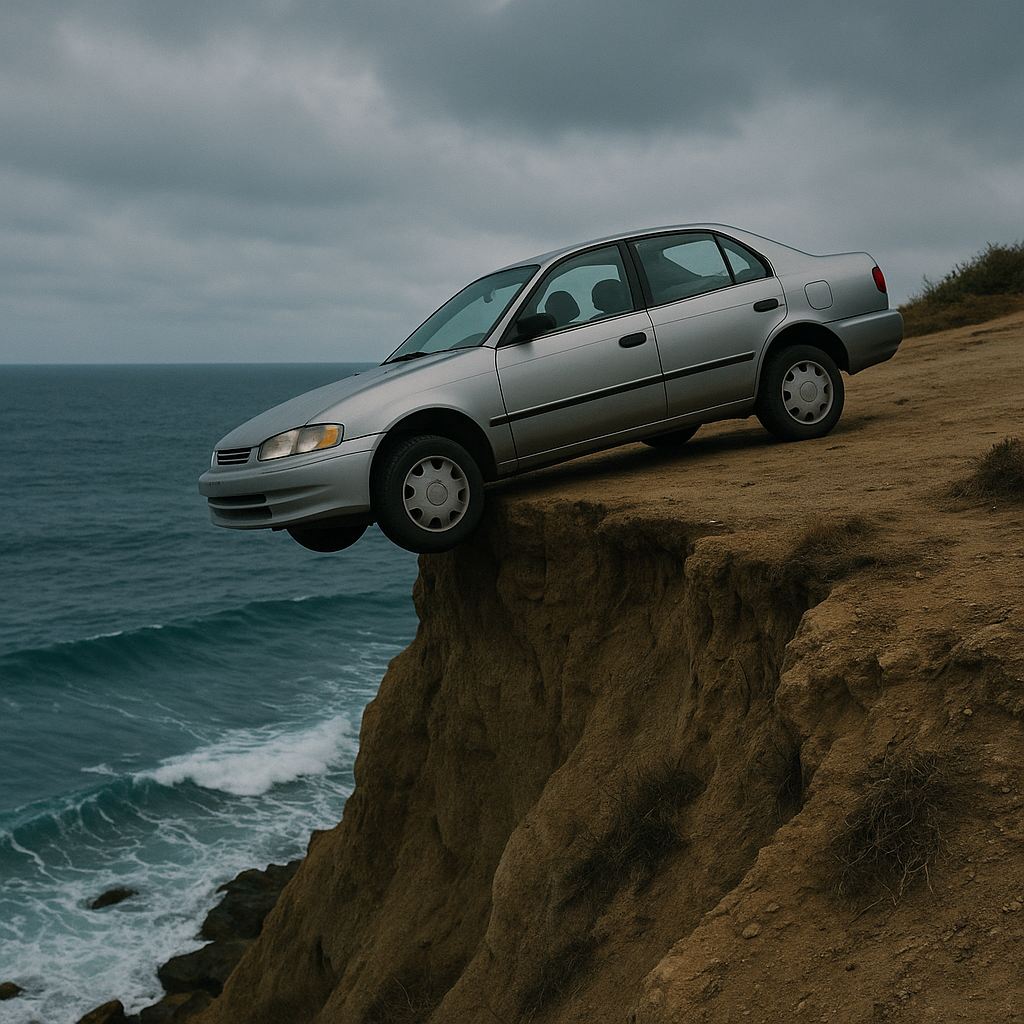
A dramatic rescue unfolds on Chapman's Peak after a car plunges 93m. Discover the challenges faced by rescuers & the road's dark history.
On January 25, 2026, a car plunged 93 meters off Chapman's Peak Drive, turning a beautiful Sunday into a frantic rescue mission. Emergency teams raced against time to save the trapped driver and her ejected cousin from the dangerous cliffside. This dramatic event highlighted the road's perilous history and the constant battle between nature's power and human efforts to stay safe.
What happened on Chapman's Peak Drive on January 25, 2026?
On January 25, 2026, a vehicle went over the edge of Chapman's Peak Drive, plunging 93 meters down a cliff. This incident triggered a large-scale rescue operation involving multiple emergency services, highlighting the treacherous nature of the road and the complex challenges of vehicle recovery and patient extraction from such a hazardous location.
Get Cape Town news in your inbox
Stay updated with the latest stories from the Mother City.
1. From Picture-Perfect to Pulse-Racing
At high noon on 25 January 2026, Chapman’s Peak Drive looked like the tourism board’s screensaver: a cobalt dome overhead, cliffs the colour of toasted saffron, and the Atlantic throwing off sequins of light. Tourists leaned out of hatchbacks for the money-shot selfie. Sixty seconds later, the tableau cracked. A radio burst alive: “Vehicle over the edge, Noordhoek side, hundred-metre drop, occupant trapped.” The postcard dissolved into ordered chaos - fluorescent jackets, spooling winch cable and the iron-tang scent of adrenaline.
The first siren rolled from Hout Bay fire station at 12:48. By 12:51 the SkyMed helicopter was spinning rotors at Cape Town International’s forensic pad and the NSRI’s jet-boat crew was trundling their 4×4 down Station 8’s slipway. On the clifftop, marshal vests formed a primary-coloured daisy chain while, below, the Atlantic kept chewing the rocks with indifferent rhythm. Nobody reached for a camera now; every eye tracked the upside-down blue Peugeot 2008 wedged against a Volkswagen-sized boulder 93 m down and seven metres above the high-water line.
The road that ribbons between Hout Bay and Noordhoek has always demanded blood rent. Hewn between 1915 and 1922 by men with pickaxes and gelignite, the nine-kilometre switchback drops 180 m in places and was immediately baptised “The 114 Turns” by breathless newspapers of the era. Stone drains and breast-high walls were added, but reflexes could not be retro-fitted. From 1922 to 1992 the official tally was 49 dead; legend says the real figure is twice that. After a minibus taxi lost eleven lives in 1994, engineers wanted the route padlocked. Commerce and nostalgia vetoed them. Instead, in 2003, R65 million bought wider arcs, half-parapet barriers, 1.2 m concrete parapets on the ocean flank and sixteen sand-traps engineered to swallow stray vehicles before gravity completed the sentence. Sunday’s wreck came to rest 300 m beyond the final trap, where the modern barrier yields to a 1920s knee-high wall that builders thought self-explanatory.
2. Two Parallel Assaults on Gravity
Rescue commander Wayne Smith, who learned mass-casualty choreography during the 1998 St James rail disaster, split the 63° slope into colour-coded strips. Red zone: scree directly above the car, already peppered with football-sized rocks. Blue zone: seaward flank reachable only by rubber fins. Yellow zone: a WWII-era footpath now smothered in fynbos but still hikeable. While rope techs drilled Class-3 anchors into the summit sandstone, two NSRI swimmers paddled a spinal board across kelp-streaked swells to secure a tide-line triage spot.
Inside the inverted cabin the driver, a 34-year-old call-centre agent from Delft, answered questions in a drowsy monotone. Her left forearm hung at a geometry-defying angle; her sneakers were pinned by crumpled floor-pan. Each time she shifted, the chassis creaked and another glug of petrol kissed the hot shale. A paramedic slithered through the missing windscreen, slid a cervical collar under her dreadlocks and vacuum-fit a KED extrication vest around her torso. City tools - spreaders, rams - were useless on a 45° sandstone slab. Instead, rescuers tensioned a 19 mm static line to 18 kN, creating a temporary rail. A Stokes litter, lashed to a Prusik-minding pulley, slid down the line like a cable-car, allowing the team to “piggy-back” the packaged patient upslope at a 1-in-6 gradient. Twenty-two minutes of winch-time felt like an hour to helmeted heads pelted by falling grit.
While the litter climbed, a second crisis brewed unseen. The Peugeot’s 48-volt mild-hybrid battery, secreted beneath the rear seat, can still arc when the roof becomes the floor. A rescue swimmer spotted turquoise sparks dancing inside the spreading fuel mirror. He jammed a plastic wedge between terminal and cable, then sealed the naked metal with maritime putty from the NS trauma pouch. Ninety seconds later the vapour temperature kissed ignition threshold; nothing happened. The act will never feature in a press release, yet it probably saved rescuer and rescued alike from a headline-grabbing fireball.
3. Crowds, Cousins and Caracals
Up on the carriageway, weekend traffic fossilised into a four-kilometre tailback. Tourists abandoned idling buses to train phones on the cliff like artillery spotters. A neighbourhood-watch volunteer wheeled out a portable espresso machine; a dehydrated German wept tears of gratitude over a free double ristretto. The first aerial snap hit X at 13:03; by 13:17 #ChappiesCrash trended second nationally, just below AFCON chat. A Ukrainian drone ace messaged geo-referenced photogrammetry that revealed a second casualty hidden in chest-high fynbos thirty metres upslope. Local radio, hungry for clicks, prematurely declared a fatality, forcing EMS to quash “death rumours” while medics were still intubating.
The ejected passenger was the driver’s 29-year-old cousin. Thrown through a missing quarter-window, he stumbled about scalped and semiconscious, desperate to climb back to the wreck. Guides herded him to the yellow-zone path where a drip line of saline started before he reached the ambulance. Tagged “Green-two - delayed, stable,” he nevertheless kept asking whether the car would explode before his cousin surfaced. No one could reassure him until the winch lifted the litter over the guardrail at 14:11. SkyMed touched down on the south-bound lane - rotor wash whipping dust devils - then sprinted skyward for the seven-minute hop to Vergelegen Mediclinic. The driver arrived with a systolic blood pressure of 80, haemoglobin 7.2 and a Grade-III splenic tear that would cost six units of O-negative and a four-hour theatre slot. By dusk she was extubated and asking for her phone, oblivious that half a million strangers had watched her almost die.
Night settled with the pass still closed. Crews hung 400 m of debris-net to catch metal shards before tomorrow’s wind could fling them into windscreens. A municipal geologist mapped fresh sandstone fractures that fluoresced violet under UV light. Somewhere above the dark surf a caracal screamed, the note so human that a rope-tech crossed himself. At 22:14 the final ambulance crunched away. Dawn would reveal only three new bolt-holes, a petro-streaked boulder and the stubborn scent of burnt clutch plate that even the famous south-easter cannot blow away.
4. Ledger of the Mountain: Wind, Memory and the Next Siren
Even before the last rope was coiled, investigators forked into three lanes: mechanical, behavioural, environmental. The Peugeot’s black box - yes, a 2022 model hoards thirty pre-impact seconds - showed 87 km/h, zero braking, a 14° left steering tick followed by a 40° right jerk, textbook micro-sleep or blow-out reflex. All four tyres still held air; the driver’s WhatsApp last-seen read 12:31, ruling out doom-scrolling. Toxicology is pending, but relatives told social workers she had worked the night shift, slept perhaps four hours, then aimed for a braai in Kommetjie - classic fatigue math.
Environmental sleuths flagged the weather: south-easter gusting 19 to 28 knots. A 2021 CSIR paper measured cross-wind spikes of 180 N lateral force on that precise bend, enough to nudge a high-riding SUV already loaded with cooler boxes and boom boxes. Add a winter sun flickering through guardrail stanchions at four hertz - close to human alpha brain waves - and you have a recipe for flicker-induced drowsiness. The probe will therefore ask engineers whether parapets should rise higher, whether smart LEDs should strobe wind warnings, whether the road should gate itself on gale days.
History counsels humility. In 1935 a bus carrying Malay choir singers missed the final hairpin; seventeen died and the song they had rehearsed - “Lekker Lekker By Die See” - became an unplayed dirge. In 1978 a truck spilled twelve tonnes of oranges that bounced downhill like oversized marbles, knocking a tourist cold and coining the Afrikaans proverb “’n Lemoen van Chapmans se Piek” for absurd bad luck. In 2004 a British bride overshot the same bend on her way to sunset vows; she survived, wed in a trauma bay and named her first son Chapmans. Each generation rewrites the cliff’s mythology, and each generation forgets - until the next radio crackle slices the postcard apart and the fluorescent ballet begins again.
What happened on Chapman's Peak Drive on January 25, 2026?
On January 25, 2026, a car plunged 93 meters off Chapman's Peak Drive. This initiated a frantic rescue mission involving multiple emergency teams to save the trapped driver and her ejected cousin from the dangerous cliffside.
What were the immediate actions taken by emergency services?
Upon receiving the

Tumi Makgale is a Cape Town-based journalist whose crisp reportage on the city’s booming green-tech scene is regularly featured in the Mail & Guardian and Daily Maverick. Born and raised in Gugulethu, she still spends Saturdays bargaining for snoek at the harbour with her gogo, a ritual that keeps her rooted in the rhythms of the Cape while she tracks the continent’s next clean-energy breakthroughs.
View all articles →