
Watch: Second Tyger Valley Home Affairs incident deepens concerns
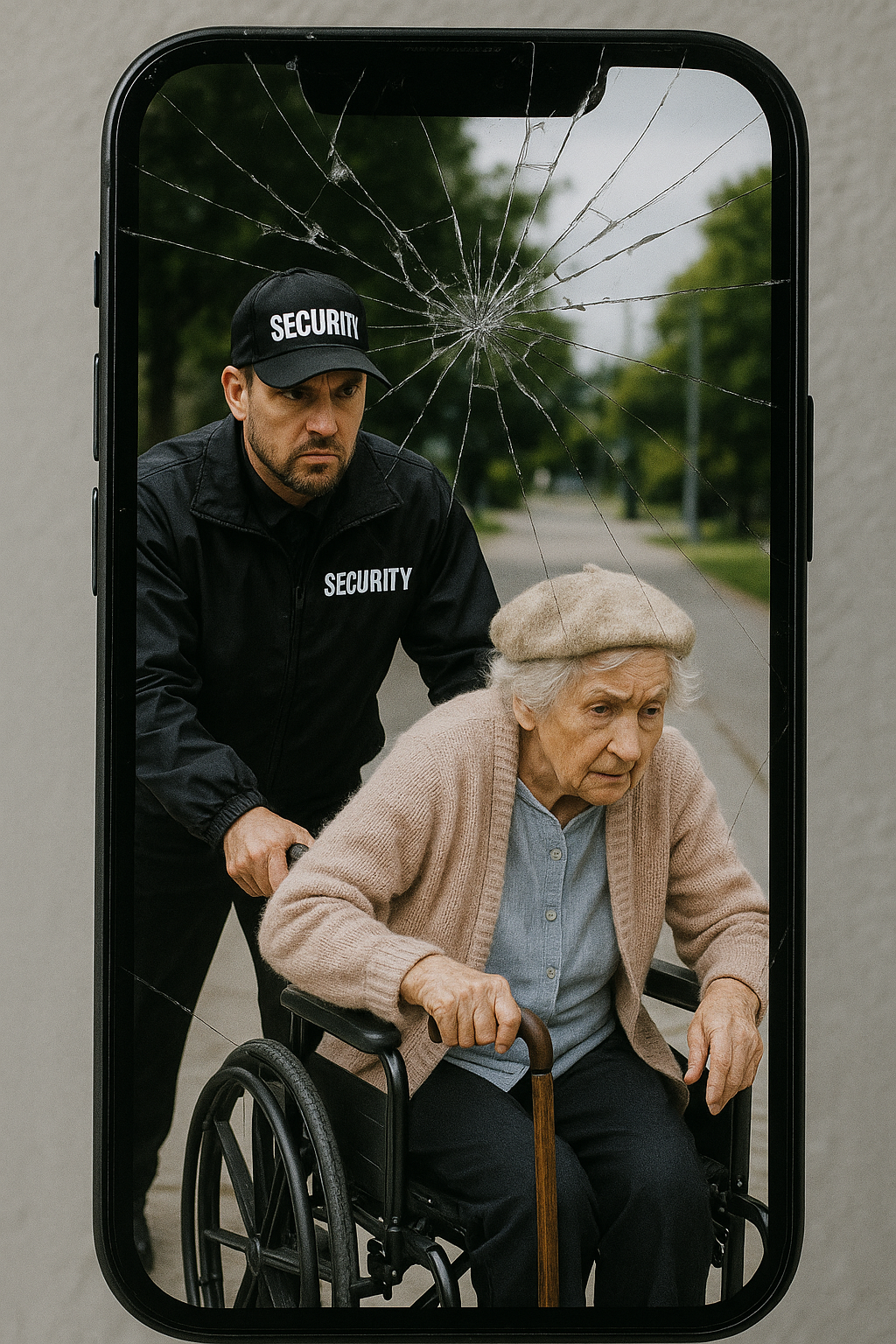
Tyger Valley Home Affairs under fire after viral videos show security mistreating elderly, sparking national outrage & parliamentary probe.
A shocking video of mall security roughly removing an elderly woman from a Home Affairs queue sparked national outrage. This incident exposed deep problems like mistreating seniors, not enough staff, and a broken online booking system. The public is now demanding better service and respect for older people.
What caused the outrage at Tyger Valley Home Affairs?
Viral videos showing mall security roughly removing an elderly woman with an appointment from the queue ignited public fury. This incident highlighted systemic issues, including alleged mistreatment of seniors, insufficient staffing, and problems with the online booking system, leading to a national debate on customer service and elder rights.
Get Cape Town news in your inbox
Stay updated with the latest stories from the Mother City.
Viral Videos Ignite National Fury
A grainy fifteen-second clip, filmed on a cracked phone and posted on a quiet Tuesday at 09:42, has detonated the biggest shake-up of Home Affairs customer rules in two decades.
In the opening frames, a frail woman in her late seventies hugs a clear plastic folder to her chest; behind her the Tyger Valley Shopping Centre queue curls past Clicks.
Seconds later, a vest-clad guard grips her back and the aluminium walking frame; her feet lift, the frame slides, and a younger onlooker who rushes forward is blocked by a second guard.
The audio is blunt: the woman calmly states she holds an appointment and a reference number; the guard answers with one word - "Outside" - and the glass doors seal shut.
The crowd erupts - “Shame!” “That’s someone’s granny!” - while the camera lingers on a peeling “Batho Pele – People First” poster before the screen goes black.
By lunchtime #TygerValleyGranny topped South African Twitter, chalking up 1.3 million views and 18 000 retweets.
Parliament’s Home Affairs committee rushed forward its weekly meeting, and the mall’s PR desk, more used to sushi specials, fielded calls from the BBC, Al Jazeera and a Japanese crew that landed at Cape Town International the same evening.
Sunset brought a unanimous resolution: the Director-General had seventy-two hours to deliver CCTV from four angles, the guard’s contract, a minute-by-minute timeline and the names of every supervisor on shift.
Committee Hearings and the Department’s Defence
Chairperson Mosa Chabane opened the emergency virtual session with the verdict that if a pensioner can be “wheeled out like broken supermarket equipment,” the entire service chain is corroded.
Committee members demanded clarity on why a private rent-a-cop is the first face citizens meet, the legal footing for barring someone with an electronic appointment, and the nationwide count of seniors turned away in the past quarter.
A parallel request landed at the Justice committee asking whether the guard’s actions amount to common-law assault under the Older Persons Act 13 of 2006.
Barely twelve hours later Home Affairs released a three-page rebuttal: the booking engine shows no valid slot for the complainant on 14 May; third-party “helpers” are selling fake reference numbers for R250–R500; the guard has been suspended; and only two of six scheduled officials reported for duty after a COVID contact alert.
A heat-map revealed that footfall at Tyger Valley has doubled since nearby Parow and Bellville offices closed, yet staff numbers were trimmed 18 % in the last budget cycle.
Nationwide, personnel dropped from 14 800 in 2019 to 12 400 in 2023 while passport and ID demand jumped 27 % - a perfect recipe for explosive queues.
Second Video, SentinelNine Contract and Mall Economics
Before the department’s deadline reached the eighteen-hour mark, a second clip appeared on the Facebook page “Cape Flats Stories.”
Filmed from a parked car, a woman called Nadia explains how the same guard - recognisable by a missing name-badge clasp - told her wheelchair-bound 81-year-old mother-in-law to “sit in the parking lot” when she asked for reasonable accommodation.
Netizens stitched the two videos side-by-side; one man, two grandmothers, zero accountability became the rallying cry.
Guards at the mall are not state employees; they work for SentinelNine, a Level-2 B-BBEE firm headquartered in Durbanville.
A R42 million one-year contract, renewed in March without open tender, covers 38 malls and 12 standalone offices on the argument that “riot risk” requires continuity.
Median pay is R28.50 an hour and PSIRA records show guards complete a 90-minute online “Use of Force” module with no refresher on de-escalation or the legal weight of a QR code.
Tyger Valley Centre itself is owned by a JSE-listed REIT that promises retailers 1.2 million shoppers a month; Home Affairs pays a symbolic R1 annual rent yet funnels thousands of captive consumers past boutique windows.
Security briefings reportedly include the instruction to “move non-shoppers out of restaurant sight-lines,” raising questions about whether profit motives fed the rough handling of elderly clients.
Elder Rights, Broken Tech and Copy-Paste Solutions
South Africa ratified the UN Convention on the Rights of Persons with Disabilities and the Older Persons Act guarantees reasonable accommodation; legal activists argue wheelchairs in windy forecourts breach both.
The Commission for Gender Equality notes that 68 % of local pensioners are women, compounding age and gender bias, while Black Sash is reviving its “Stand-in-the-Gap” campaign to station volunteer law students as buddies for clients over 70.
The department’s e-launch of 2019 was meant to kill queues, yet 42 % of slots are snatched by bots that reserve 450 places in twelve minutes and resell them at a markup.
A February CAPTCHA designed to thwart scalpers instead blocked genuine users on 2G feature phones and crashed mobile traffic by 19 %.
Auditors warn that until a biometric digital-ID wallet arrives - tentatively 2025 - third-party scalpers will keep winning.
Canada pays pensioners a grocery voucher if same-day service fails, India sends biometric vans to villages, Portugal embeds multi-service kiosks in pharmacies and Brazil flashes a red light if any step drifts past fifteen minutes.
Treasury calculates a hybrid pilot - roaming township units plus mall kiosks with time guarantees - would cost R1.8 billion in the three busiest provinces, small change beside the R11 billion lost to ID fraud between 2018 and 2022.
What Comes Next and How to Jump the Queue
The Portfolio Committee expects a 40-page report and unedited CCTV by Friday; a departmental task team will audit 97 mall offices; SentinelNine must submit a PSIRA-approved retraining schedule or risk contract cancellation; the Public Protector is weighing a systemic maladministration probe; and civil-society hearings go live on YouTube in Xhosa, Afrikaans and SA Sign Language on 18 June.
While the gears of state grind on, pensioners already print appointment slips on neon paper, a Rondebosch group is crowdfunding “Elders Before Otters” camping chairs, and coders are beta-testing a Telegram bot that pings the moment a cancelled slot opens.
One grandmother swears by a camping kettle and free coffee for the guards; her waiting time has plummeted from four hours to 45 minutes - proof, perhaps, that humanity can sometimes be brewed by the cup rather than legislated by the book.
What caused the national outrage at Tyger Valley Home Affairs?
A shocking video showing mall security roughly removing an elderly woman with a valid appointment from the queue at Tyger Valley Home Affairs went viral. This incident sparked national outrage, highlighting concerns about the mistreatment of seniors, inadequate staffing, and a dysfunctional online booking system.
What systemic issues did the incident at Tyger Valley Home Affairs expose?
The incident at Tyger Valley Home Affairs exposed several deep-seated problems within the department. These include the alleged mistreatment of elderly citizens, a severe shortage of staff, and critical flaws in the online booking system. It also brought to light the reliance on private security firms for customer management and questions about their training and authority.
How did Home Affairs respond to the allegations and public outcry?
Home Affairs initially issued a three-page rebuttal, stating that their booking engine showed no valid slot for the complainant, suggesting third-party 'helpers' were selling fake reference numbers, and noted that only two of six scheduled officials reported for duty due to a COVID contact alert. They also suspended the guard involved. However, further parliamentary pressure led to demands for more comprehensive reports and CCTV footage.
What role did private security play in this incident, and what are the concerns surrounding their involvement?
The security guards involved were employees of SentinelNine, a private firm contracted by the mall. Concerns arose about the legal authority of private security to remove citizens with appointments, their training (especially regarding de-escalation and the Older Persons Act), and their low median pay. There are also questions about whether mall economics and instructions to 'move non-shoppers' influenced their actions.
What are the proposed solutions and ongoing efforts to address these issues?
Several initiatives are underway or proposed: parliamentary committees are demanding reports and audits, SentinelNine faces potential contract cancellation if retraining is not approved, and the Public Protector is considering a systemic maladministration probe. Civil society groups like Black Sash are reviving campaigns to support seniors, and there are calls for improved technology, such as a biometric digital-ID wallet, to combat scalping and improve service delivery, potentially including hybrid service models like roaming units and mall kiosks.
What advice is available for elderly citizens navigating Home Affairs services?
While official solutions are being implemented, some community-led efforts offer immediate relief. Pensioners are advised to print appointment slips on bright paper for visibility. Some groups are crowdfunding for portable chairs, and coders are developing tools like Telegram bots to notify users of cancelled slots. Anecdotally, some elderly individuals have found that offering small acts of kindness, such as coffee for guards, can improve their waiting experience.

Lerato Mokena is a Cape Town-based journalist who covers the city’s vibrant arts and culture scene with a focus on emerging voices from Khayelitsha to the Bo-Kaap. Born and raised at the foot of Table Mountain, she brings an insider’s eye to how creativity shapes—and is shaped by—South Africa’s complex social landscape. When she’s not chasing stories, Lerato can be found surfing Muizenberg’s gentle waves or debating politics over rooibos in her grandmother’s Gugulethu kitchen.
View all articles →