
WC ramps up foot-and-mouth disease vaccination efforts with 100,000 new doses
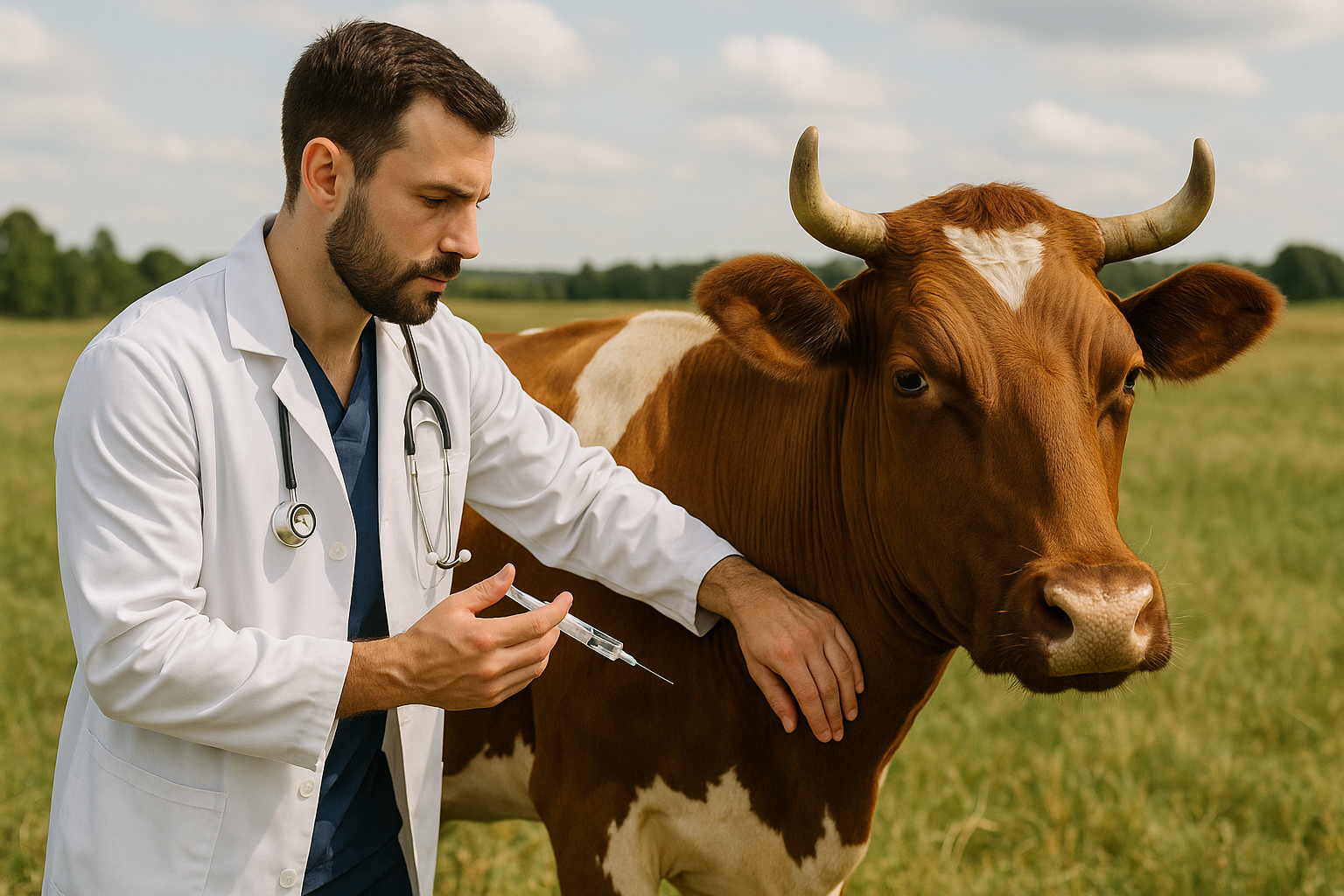
Western Cape fights Foot-and-Mouth Disease with a 21-point counter-offensive, rapid vaccine deployment & innovative tech.
The Cape fought a Foot-and-Mouth Disease outbreak with a swift 21-day plan. They flew in 100,000 vaccines, using smart computer programs to decide where to give the shots first. High-tech tools like drones and GPS helped watch over everything, aiming to protect 70% of animals fast. This big effort was to save the Cape's huge R54 billion farming economy from trouble.
How did the Cape combat the Foot-and-Mouth Disease outbreak?
To combat the Foot-and-Mouth Disease (FMD) outbreak, the Cape implemented a rapid 21-day counterstrike. This involved airlifting 100,000 vaccine doses, using algorithms for targeted ring-vaccination, and deploying high-tech surveillance like drones and GPS tracking. The strategy aimed for 70% herd immunity within three weeks to protect the region's R54 billion agri-economy.
Get Cape Town news in your inbox
Stay updated with the latest stories from the Mother City.
1. Midnight Freight: How 100 000 Frozen Bullets Flew In
A Qatar Airways charter thumped onto Cape Town’s runway at 22:14 on a blustery Tuesday. Passengers scrolling through arrival boards never noticed the unmarked belly cargo: 100 Dewar flasks cradling 100 000 doses of SAT-2 vaccine, each vial babysat by thumb-sized loggers that fired temperature data to the cloud every minute and a half. Within ten minutes a blue-light convoy whisked the load through a sealed diplomatic corridor normally reserved for embassy pouches and slid it into a –80 °C freezer truck lent by Shoprite’s pharma wing. The single-night import dwarfed the 30 000-dose drop that reached the Kruger buffer zone in 2011, and it reset the clock for a province that shelters 2.3 million cattle, 5.8 million sheep and ninety percent of South Africa’s EU-bound table grapes and citrus. Lose the internationally coveted “FMD-free-without-vaccination” label and those perishables kiss premium shelves in Europe, China and the Gulf goodbye.
The freighter’s arrival also triggered an invisible relay. Miniature sensors continued pinging until the flasks reached Stellenbosch, proving to overseas auditors that the cold chain never wavered. Provincial treasurers breathed easier; one thermal lapse could have torpedoed the entire operation. Meanwhile, WhatsApp groups of private vets lit up with a simple code: “Package landed, draw at dawn.” By sunrise, four-wheel-drive bakkies were already queuing at the state兽医 cold store, their tailgates dropped to receive coolers that look like picnic boxes but carry a R40 million insurance policy against economic collapse.
Few farmers saw the hand-off, yet every head of livestock in the province now depends on those 2 ml aliquots of hope. The clock started the moment the aircraft doors cracked; the virus incubates for a maximum of twenty-one days, so immunity must outrun infection in a three-week sprint. That Tuesday touchdown was therefore less a shipment and more a starter pistol fired on a racetrack where the prize is an entire regional economy.
2. Viral GPS: How Algorithms Drew the First Red Rings
Two weeks earlier Onderstepoort vets dropped a genomic bombshell: the Limpopo outbreak strain matched Swartland dip-tank swabs at 99.7 %. Translation: the pathogen had hitch-hiked 1 800 km south-west in roughly thirty-six hours, hidden in a bale of lucerne, a muddy tyre tread or one seemingly healthy calf. Epidemiologists overlaid cattle-density heat maps with informal auction routes, abattoir invoices and river crossings, then let a risk engine spit out fourteen “red nodes” where the reproductive number could top five. Political clout played zero role; an algorithm ranked each farm by wind drift, trucking frequency and water runoff. The first 30 000 doses would therefore go to places most motorists have never heard of - tiny feedlots outside Malmesbury and communal grazing strips along the Riebeek River - because maths said so, not ministers.
Those red nodes became ground zero for ring-vaccination, a tactic that works only if you know exactly where animals have trodden. Enter the provincial GIS unit, which fused cellphone GPS data from livestock trucks with historical auction receipts to draw 3 km protection halos and 10 km surveillance halos around each node. Any beast that crossed those digital fences in the past month popped up as an amber dot on a live map. Private vets received marching orders: “Start inside the crimson core and work outward like a brush-fire crew.” By the time citizens woke up on Wednesday, invisible immune belts were being stitched across the Swartland wheat fields.
But maps mean little without buy-in. Communal herders who graze cattle on municipal land rarely tag animals electronically, so field teams carried bright plastic crates loaded with free ear-tags, bright green hay bales and prepaid data bundles. The pitch was simple: tag your herd, get free vaccine and keep your oxen alive long enough to pay next term’s school fees. In effect, the same algorithm that drew red circles also split the province into two lanes: a high-tech fast lane for commercial farms already on the cloud, and a subsidised outreach lane where chalk marks on cardboard still count - provided they are photographed and uploaded before sunset.
3. War-Room Pulse: Drones, WhatsApp and 70 % in Three Weeks
Inside a repurposed disaster hall at Tygerberg Hospital, a 12 m LED wall flickers 24/7. Drone feeds from highway checkpoints stream beside WhatsApp voice notes sent by field vets; colour-coded tiles flash amber the moment a cattle truck strays 50 m from its approved corridor. A red tile fires an automatic SMS to traffic cops, who divert the vehicle to a quarantine paddock near Worcester. Parallel dashboards track vaccine burn-rate; by 05:00 Wednesday the counter read 14 874, proof that twenty-nine private practitioners had drawn stock before sunrise. Each vet carries a pistol-grip RFID scanner; one swipe of an ear-tag reveals an animal’s entire biography - birth farm, auction history, every dip-tank date - while the software paints a 3 km or 10 km halo around its current location.
The logistics ballet is relentless. Shoprite’s freezer trucks shuttle vials to Stellenbosch every six hours; from there, phase-change coolers keep shots at 4 °C while bakkies climb gravel switchbacks where cabin temps can swing 8 °C in half an hour. On-site, auto-disable syringes inject exactly 2 ml and log GPS co-ordinates plus time stamps that upload to the national animal-identification system within ninety seconds. Farmers receive an SMS certificate with a QR code that EU auditors can verify online; auctioneers scan the code before gavels fall. The target is 70 % herd immunity inside twenty-one days, the outer edge of SAT-2’s incubation period. Anything less leaves holes the virus can exploit.
Night shifts bring a different rhythm. Thermography drones launch at 03:00 to overfly feedlots, hunting for hooves hotter than 40 °C. Detect a suspect, and a ground crew roars out for a rectal double-check. Meanwhile, young vets such as Aisha log kilometres on corrugated roads, headlights carving silver tunnels through wheat stubble. Each syringe she empties increments a digital counter watched by treasurers in Cape Town and trading desks in Rotterdam. The unspoken pact: keep that number climbing faster than invisible viral particles can replicate, and the province’s R54 billion agri-economy survives to see another harvest moon.
4. Beyond the Syringe: Roadblocks, Wallets and a 24-Month Clock
Highway N1 at the Huguenot Tunnel now feels like a low-grade border post. Portable rumble strips funnel trucks into single file; a 20 m disinfection bath of 0.5 % citric acid forces every tyre to soak for a full nine seconds. Upstream, licence-plate cameras feed an AI engine that cross-checks permits against a live database; miss an orange RFID seal and the boom gate stays shut. Since go-live, 1 847 rigs have crawled through the dip, fourteen sent to a 48-hour paddock, sparing southern districts an estimated 2 300 risky hoof prints. Critics call it theatre; economists call it cheap insurance against a R6 billion meltdown.
Price tags focus minds. A six-month outbreak would vaporise R1.2 billion in livestock sales, R2.8 billion in abattoirs and tanneries, and another R1.9 billion in table-grape and citrus freight delays. Add eco-tourism bans and the bill balloons to R6.3 billion. Against that, the R40 million vaccine cargo plus R8 million logistics tab amounts to less than one percent of potential damage. Meanwhile, innovations sprout overnight. Thermal drones now screen cattle with 92 % accuracy, a Stellenbosch lab trials biodegradable “DNA ink” that reveals hoof origin at roadblocks, and Shoprite quietly pilots a blockchain ledger EU auditors can inspect without touching government servers. Each gadget buys time or trust, sometimes both.
Yet the biggest cliff still looms: international rules say vaccinated zones lose “FMD-free-without-vaccination” bragging rights for twenty-four months. The province therefore wages a diplomatic side-game, negotiating to switch some EU quotas into heat-treated goods - UHT milk, vacuum-packed biltong - while Middle Eastern buyers hint they will accept chilled beef if the new blockchain traceability layer vouches for every bite. Back on the gravel road outside Riebeek-Kasteel, Aisha snaps the cap off her tenth syringe as cattle breathe clouds into the winter night. A faint beep logs dose 48 614, a number that matters less than the promise that tomorrow’s braai fires, school fees and export cranes will keep humming, one 2 ml shot at a time.
How did the Cape combat the Foot-and-Mouth Disease outbreak?
To combat the Foot-and-Mouth Disease (FMD) outbreak, the Cape implemented a rapid 21-day counterstrike. This involved airlifting 100,000 vaccine doses, using algorithms for targeted ring-vaccination, and deploying high-tech surveillance like drones and GPS tracking. The strategy aimed for 70% herd immunity within three weeks to protect the region's R54 billion agri-economy.
How were the vaccines transported and secured?
The Cape received 100,000 doses of SAT-2 vaccine via a Qatar Airways charter, which landed at 22:14. The vaccines were transported in 100 Dewar flasks, each equipped with loggers to monitor temperature every 90 seconds. A blue-light convoy whisked them to a -80 °C freezer truck lent by Shoprite's pharma wing. This meticulous cold chain management was crucial for international auditing and to ensure vaccine efficacy upon arrival in Stellenbosch.
What role did technology and algorithms play in the vaccination strategy?
Algorithms were central to the Cape's strategy. Epidemiologists used cattle-density heat maps, auction routes, and abattoir invoices to identify "red nodes" – high-risk areas for FMD spread. These algorithms determined where the first 30,000 vaccine doses would be deployed, prioritizing areas based on risk rather than political influence. GIS units also used cellphone GPS data from livestock trucks and historical auction receipts to create 3 km protection halos and 10 km surveillance halos for targeted ring-vaccination.
How was real-time monitoring and surveillance conducted during the outbreak response?
A repurposed disaster hall at Tygerberg Hospital served as a war-room, featuring a 12 m LED wall that displayed drone feeds from highway checkpoints and WhatsApp voice notes from field vets 24/7. Color-coded tiles indicated cattle truck movements, triggering automatic SMS alerts to traffic police if vehicles strayed. RFID scanners provided real-time animal biographies and location tracking, while thermography drones conducted night-time scans for feverish animals, ensuring rapid response and containment.
What measures were implemented to prevent further spread and protect the economy?
Beyond vaccination, the Cape implemented stringent biosecurity measures. The N1 highway at the Huguenot Tunnel became a controlled checkpoint with portable rumble strips, a 20-meter disinfection bath for tires, and AI-powered license plate cameras to verify permits. These measures aimed to prevent the movement of infected animals and vehicles, safeguarding against an estimated R6 billion economic meltdown. The overall cost of the vaccine and logistics was a small fraction of the potential economic damage.
What are the long-term implications and challenges for the Cape's FMD-free status?
The biggest challenge is that vaccinated zones lose their "FMD-free-without-vaccination" status for 24 months under international rules. This impacts export markets for premium products like EU-bound table grapes and citrus. The province is negotiating to shift some EU quotas to heat-treated goods and exploring blockchain traceability with Middle Eastern buyers for chilled beef, aiming to maintain market access during this recovery period and beyond.

Sarah Kendricks is a Cape Town journalist who covers the city’s vibrant food scene, from township kitchens reinventing heritage dishes to sustainable fine-dining at the foot of Table Mountain. Raised between Bo-Kaap spice stalls and her grandmother’s kitchen in Khayelitsha, she brings a lived intimacy to every story, tracing how a plate of food carries the politics, migrations and memories of the Cape.
View all articles →