
Why is the Zimbabwe bird return so significant?
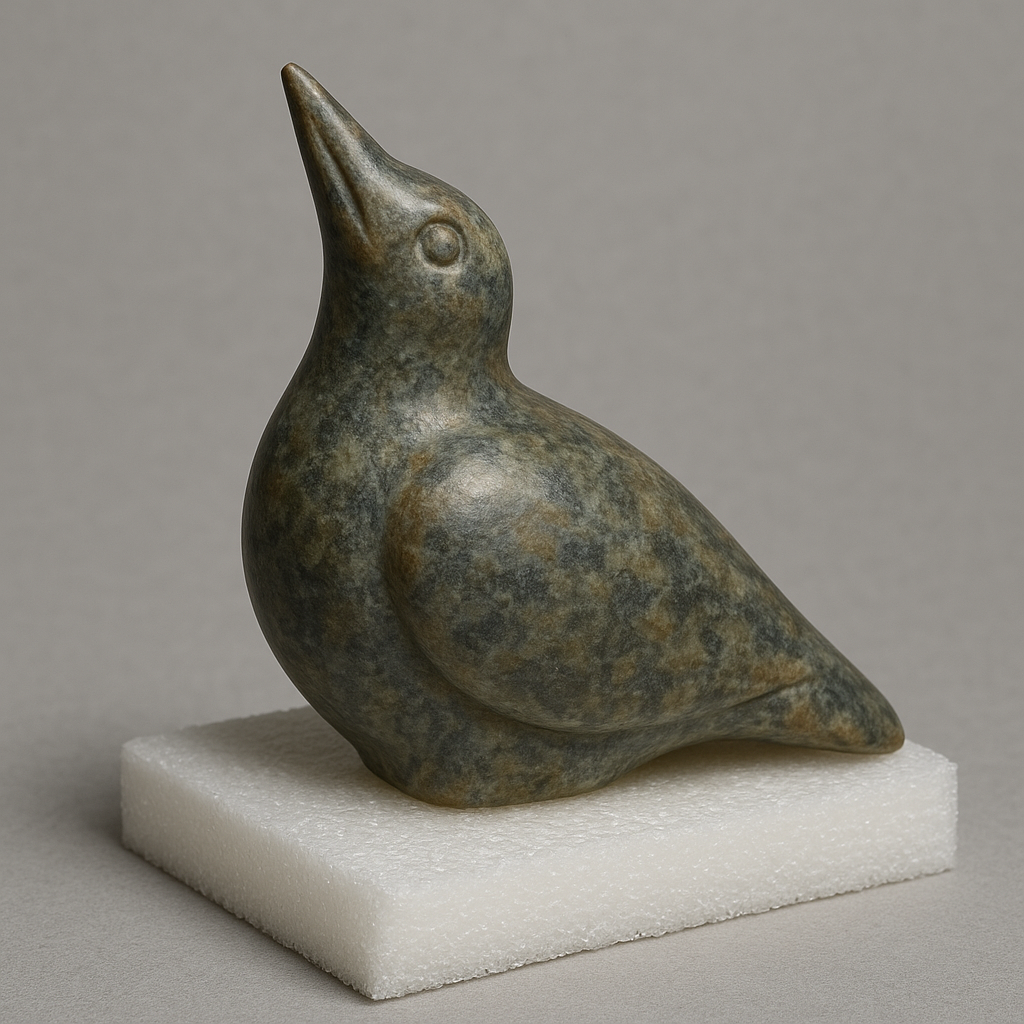
Historic restitution: A Zimbabwe bird and human remains return home, sparking a new era of cultural repatriation and digital heritage.
On April 14, 2026, a special day dawned as Zimbabwe's sacred bird came home. This little soapstone raptor, stolen long ago, flew back from South Africa on a military plane. It wasn't alone; eight coffins with ancestral bones returned too, bringing back history and healing. This event shows a worldwide change, as old wrongs are being righted and cultural treasures are going back to their true homes. It's a new chapter where heritage is honored and communities get their power back.
What is the significance of the Zimbabwe Bird's return?
The return of the Zimbabwe Bird signifies a pivotal moment in cultural restitution, symbolizing the reversal of colonial-era seizures and the re-establishment of ancestral connections. This event, alongside other repatriations, highlights a global shift towards re-evaluating historical injustices and empowering source communities with their heritage, fostering ethical rebalancing and knowledge exchange.
Get Cape Town news in your inbox
Stay updated with the latest stories from the Mother City.
The Vault Opens: A 140-Year Journey Reverses
At first light on 14 April 2026, Cape Town’s Iziko South African Museum unlocked its most heavily guarded storeroom. Inside, a palm-sized soapstone raptor - no loftier than a bottle of Chenin - rested on acid-free foam, beak tilted as if it still scanned the granite kopje where it had stood sentinel 140 years earlier. Seventy-five minutes later the carving, plus eight hand-planed teak coffins, lifted off in a Zimbabwean air-force Hercules, crossing the Limpopo faster than Karl Mauch’s ox-wagon ever managed when he “discovered” Great Zimbabwe and pocketed its icons.
The tarmac send-off copied the choreography of a state funeral. A brass band blasted “Nkosi Sikelel’ iAfrika” beneath the 1897 neo-Renaissance façade - erected the same decade Cecil Rhodes’ agents handed £600 to a fortune hunter for three stone birds. President Emmerson Mnangagwa, tie matching the carving’s ochre veins, watched South Africa’s arts minister cite the 2023 Restitution Act that made the transfer irreversible. TV crews circled a motorized dais so the chevron neck-rings - now linked to medieval gold-smelters - could be streamed live to Harare.
Eight caskets followed, shouldered by four SANDF pall-bearers in white gloves and four Zimbabwean liberation veterans whose medals clinked against the wood. Inside lay the scattered skeletons Richard Nicklin dug up between 1893 and 1907, labelled a “vanishing race” to feed phrenologists’ fantasies. A 2022 tooth-test mapped the mitochondrial DNA to present-day Shona farmers living within sight of the Great Enclosure, sealing the case under the 2020 SADC Human Remains Protocol.
Rituals on the Runway: Beer, Millet and a Minute of Ululation
Reverend Paul Damasane stepped forward with a calabash of mhanga beer and a winnowing basket of pearl millet. In both Shona and English he declared the bones would spend half a year in the Great Zimbabwe conservation lab while experts rebuild faces and family trees. “Then they sleep at the hill’s foot,” he said, “where November rain-calls still rise.” The crowd - Cape Town’s mayor (a Krotoa descendant) and the Zimbabwean envoy whose grandfather fought in 1896 - answered with a rising ululation that rolled across the apron for sixty seconds.
The soapstone traveller rode in a carbon-fibre box laser-cut to its silhouette, foam-lined and Bluetooth-ready, pinging humidity every thirty seconds. South African conservators spent eighteen months picking off the 1968 nylon stitches and wicking micro-cracks with Paraloid. They left a 1932 etched cross - museum graffiti - because Harare scholars insisted colonial wounds are part of the life-story. Loadmasters slid the crate into the Hercules last, centring the 7.3 kg payload over the wings to keep drag symmetrical on take-off.
Inside the emptied gallery, staff swapped the old label for kraft-card that reads: “This cradle once held a sacred Zimbabwe bird, seized 1889, repatriated 14 April 2026. What else should leave?” Three smaller birds - tags blank - already face new claims. A QR code invites visitors to spin a 3-D scan and hear drums recorded at last year’s moral-reparation rite.
Chain Reaction: From Benin Bronzes to Digital Twins
The ripple did not stop at the Limpopo. Six months earlier President Ramaphosa stepped off a Swissair flight with a red diplomatic briefcase: divining bones and a carved staff lifted from the Nkuna chiefdom in 1924 by missionary Henri-Alexandre Junod. Neuchâtel’s ethnography museum voted unanimously after student protesters quoted Junod’s own diary - “three yards of calico and a tin of coffee” - as the going bribe. The staff tapped earth again during the Nkuna initiation graduation, re-stitching custodians across a century.
Private capital followed. AngloGold Ashanti, grandchild of Rhodes’ gold dreams, handed 112 Asante regalia - soul-washer badges, Bekwai-standard weights - to Otumfuo Osei Tutu II in Kumasi’s Manhyia Palace. No treaty forced the move; the firm bought the pieces on the open market and claimed “ethical rebalancing” plus a Ghanaian tax break. The king pledged gate fees from a new palace museum to math-and-science scholarships for Kumasi teens.
Brussels, anxious of lawsuits, has pre-emptively posted 85 000 Congolese items online, inviting elders to tag memories. An 82-year-old woman clicked on a 1932 bark-cloth skirt and typed: “My grandmother danced the moon ceremony in this.” Frankfurt’s colonial archive now trains Herero visitors to LED-digitize genocide glass-plates so Windhoek classrooms can witness without waiting for originals.
Technology is dissolving the “keep-it-safe” excuse. The Zimbabwe bird’s 12-gigabyte mesh dropped under Creative Commons within an hour of departure; Bulawayo artisans CNC-mill aluminium souvenirs at twenty-five dollars each. The Nkuna staff doubles as a hologram for ceremonies when the wood must rest. Even bone is cloned: every cranial chip was shot at 80 megapixels so students can measure orbital indices on-screen.
The New Arithmetic: Scans, Shares and Runway Confetti
Robert Gabriel Mugabe International Airport, 21:14. Floodlights dimmed, blue taxiway LEDs glowed, drummers pounded the hunter’s-heart rhythm. Paraffin lamps floated beside coffins; a police helicopter rained dehydrated msasa leaves, bronze against tarmac like metallic feathers. No red carpet - just bare feet and song.
Across oceans, risk registers quiver. The British Museum’s internal ledger flags “Zimbabwe birds - high probability/high impact 2027–28.” London offers a renewable loan; Harare insists on outright return plus DHL bill. Washington’s Smithsonian returned Benin bronzes but kept the 3-D files; Nigeria argues data itself is looted. UNESCO’s 2026 digital-ethics draft says source communities must co-own scans and veto commercial use.
Insurance underwriters feel the tremor. Premiums for sub-Saharan artefacts leapt 18 % since 2024. Auction houses now demand provenance back to 1885; hedge funds dump inventory, scared of tomorrow’s seizure notices. A London dealer whispers: “Buy living artists - at least you get a studio receipt.”
Yet knowledge, like the bird, is flying home. European conservation students flock to Great Zimbabwe to learn cattle-dung poultices that suck salt from chlorite twice as fast as lab chemicals. Kumasi bronze-casters invite German laser-welders to teach invisible seam repair, readying for the day the plaques fly back. Restitution has become a two-lane highway: objects south, skills north.
Inside Zimbabwe the bird will not perch on the old wall yet. For three lunar cycles it will rest in a thatched hut by the western gate while Mugabe clan elders perform rain-calling rites. Then architects from Cape Town and Harare will raise a climate-controlled gallery - rammed-earth walls, solar roof - whose circular floor replays the city’s ancient geometry. Citizens enter free; foreigners pay ten dollars that will drill village boreholes.
The eight coffins slipped into the Matobo granite on a cool May dawn. A goat’s blood cooled the soil, cowhide wrapped the bones, graves angled to the sunset so the dead can walk backwards through time. No press, only rattles and drone-buzz mapping the spot for scholars yet unborn.
[{"question": "What is the significance of the Zimbabwe Bird's return?", "answer": "The return of the Zimbabwe Bird signifies a pivotal moment in cultural restitution, symbolizing the reversal of colonial-era seizures and the re-establishment of ancestral connections. This event, alongside other repatriations, highlights a global shift towards re-evaluating historical injustices and empowering source communities with their heritage, fostering ethical rebalancing and knowledge exchange."}, {"question": "When did the Zimbabwe Bird return and from where?", "answer": "The sacred Zimbabwe Bird returned on April 14, 2026, from the Iziko South African Museum in Cape Town. It was transported back to Zimbabwe on a military plane."}, {"question": "What other items were repatriated along with the Zimbabwe Bird?", "answer": "Along with the soapstone raptor, eight coffins containing ancestral bones were also returned. These bones belonged to individuals identified as ancestors of present-day Shona farmers."}, {"question": "How was the return ceremony conducted?", "answer": "The return involved a state funeral-like send-off in Cape Town with a brass band and dignitaries. In Zimbabwe, the arrival was met with traditional rituals including beer and millet offerings, ululation, and drummers. The ancestral bones were later laid to rest with traditional ceremonies in the Matobo granite."}, {"question": "What is the broader impact of this repatriation event?", "answer": "This event is part of a growing global movement of cultural restitution, inspiring other countries and institutions to return looted artifacts. It has led to new legislation (like South Africa's 2023 Restitution Act), corporate 'ethical rebalancing,' and technological advancements for digital repatriation and knowledge sharing. It emphasizes the importance of heritage for community empowerment and healing."}, {"question": "What happens to the Zimbabwe Bird and ancestral bones now that they have returned?", "answer": "The Zimbabwe Bird will initially rest in a thatched hut for three lunar cycles for traditional rites before being housed in a new climate-controlled gallery at Great Zimbabwe. The ancestral bones will spend six months in a conservation lab for reconstruction and family tree building before being laid to rest at the foot of the hill, angled to the sunset.", "additional_info": "The digital twin of the Zimbabwe Bird (12-gigabyte mesh) was released under Creative Commons, allowing for local production of souvenirs and educational access. This highlights how technology is aiding in making cultural heritage accessible globally while respecting source community ownership."}]

Sizwe Dlamini is a Cape Town-based journalist who chronicles the city’s evolving food scene, from boeka picnics in the Bo-Kaap to seafood braais in Khayelitsha. Raised on the slopes of Table Mountain, he still starts every morning with a walk to the kramat in Constantia before heading out to discover whose grandmother is dishing up the best smoorsnoek that day.
View all articles →