
Why is UCT’s Jagger Library still boarded up?
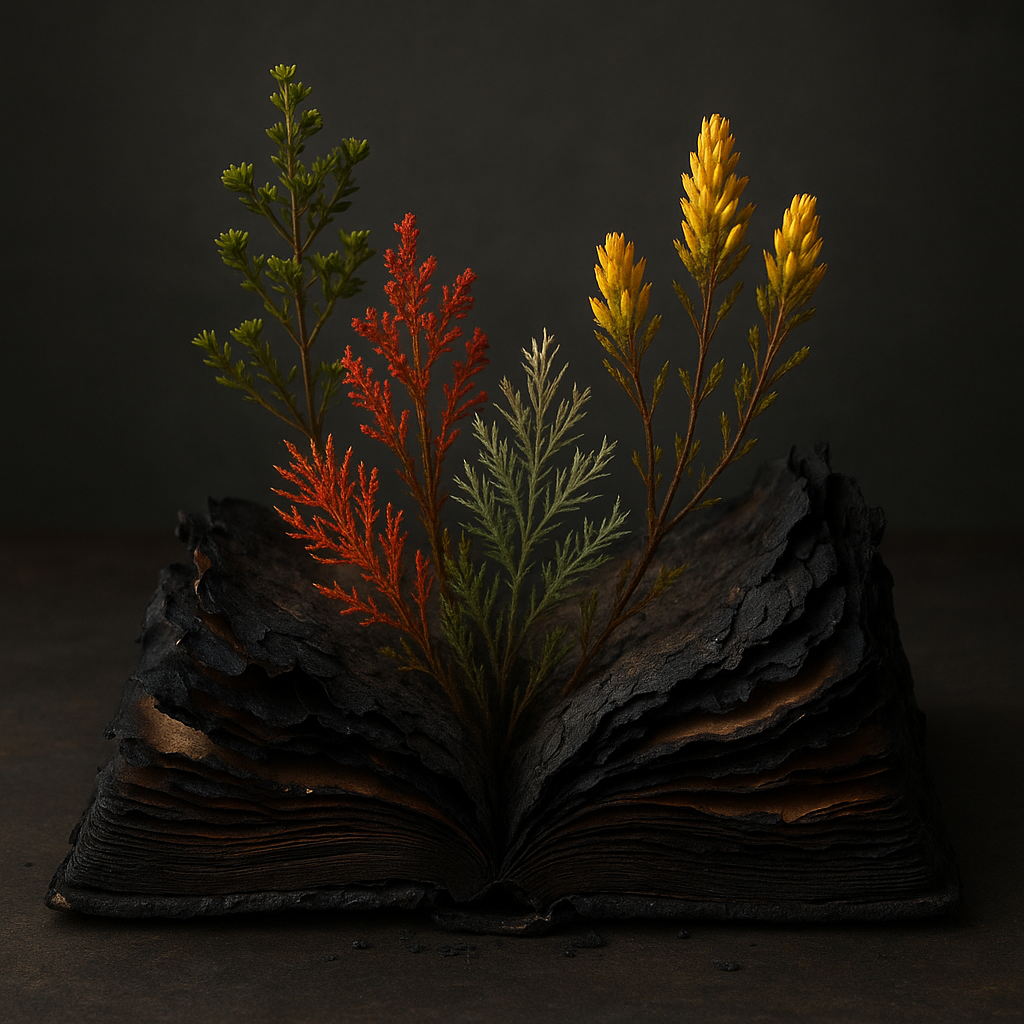
Explore the slow rebirth of Jagger Library, damaged by fire, as it grapples with reconstruction, reimagination, and its colonial past.
The JW Jagger Library, a grand old building, was badly burned by a big grassfire in 2021, leaving it an empty shell. Now, it's a place of quiet ruins, with rusty metal and ash everywhere, and no one knows when it will ever be fixed. The university is talking about "re-imagining" it instead of just rebuilding, with big ideas that haven't happened yet. Meanwhile, the books that were saved are stored far away, and there's not enough money to fix the library, so its future is a real mystery.
What happened to the JW Jagger Library?
The JW Jagger Library was severely damaged by a grassfire on April 18, 2021. The fire destroyed the special-collections reading room, leaving the building as a scorched carcass. Extensive damage to the structure and collections occurred, with a significant portion of the salvaged materials currently housed off-site awaiting restoration and a decision on the library's future.
Get Cape Town news in your inbox
Stay updated with the latest stories from the Mother City.
The Empty Shrine at the Foot of the Mountain
Padlock, fence, plywood: that is the only greeting offered by the building that once welcomed every curious mind in Cape Town. The 1931 neo-Georgian JW Jagger Library, wedged between Jammie steps and the eastern buttress of Table Mountain, has gaped open to rain and seagulls since 18 April 2021. On that wind-torn Sunday a grassfire sprinted upslope, vaulted the service road, and treated the special-collections reading room as kindling. Forty-eight months later the carcass is still there: rusted trusses poking through a PVC tarp that was sold as a two-season Band-Aid, terrazzo stairs cloaked in ash so fine it behaves like liquid underfoot.
No one has moved back in, and no date for return has been pencilled. The university’s website prefers the word “re-imagination” to “rebuild,” repeating it thirty-seven times in a glossy 160-page PDF that feels closer to an art-curatorial manifesto than a disaster report. Drought-proof creepers that blush with the seasons, a Karoo seed vault sunk in the old basement, a reading room where every codex is twinned with its own hologram - none of these sketches has advanced beyond pixels. Heritage Western Cape, legally obliged to bless any alteration to the listed façade, says the paperwork hasn’t landed. Meanwhile the temporary roof sags like a tired circus tent and steel beams exfoliate orange flakes that stain the sandstone below.
What looks like paralysis is, according to campus spin doctor Elijah Moholola, a strict protocol: values vision first, heritage study second, business case third, purse-strings fourth, bricks last. Conservators whisper that the sequence may outlast the remains: lintels already spit out fist-sized shards, and every new southeaster peels another layer of intumescent paint from the joists. Inside, the elevator shaft has become a vertical garden of indigenous ericas germinated from seeds stuck to fire-fighters’ boots; their roots prize apart the concrete while wagtails nest in the control panel.
The Strange Afterlife of What Was Saved
Four kilometres east, in a repurposed call-centre called Deneb House, the library’s rescued guts lead a second life under fluorescent light. Thirty-seven thousand items - freeze-dried, frost-zapped, or simply swaddled in Tyvek - await their turn at a single reading table. Scholars email a wish-list; staff fish out cartons like takeaway orders. A Congolese PhD tracking missionary isiXhosa primers jokes that the menu changes daily and half the dishes are “sold out.” The queue currently runs six weeks, and UCT Libraries director Ujala Satgoor warns that even a no-frills rebuild - pretty much the 1943 floor plan plus sprinklers - will swallow R280 million and swallow time until 2028.
Insurance money will not foot the bill. After a two-year argument over whether the blaze was one catastrophe or several, the policy paid out R135 million in March, barely half the conservative estimate. The rest must come from donors who remember #FeesMustFall and from a state fiscus that has been told to tighten its belt until it squeaks. Satgoor’s team colour-code the salvaged books like triage tags: red for smoke, yellow for water, blue for “impact trauma” when beams fell. Every Tuesday conservation tech Nandi Mabombo wheels a trolley into the loading bay, fans each folio under UV, and watches for mould constellations. “Paper has a nine-month memory,” she says. “If it wants to die, it tells you in the first two seasons.” Then she wraps the survivors again and shelves them back into darkness.
While accountants hesitate, the archive has become coursework. Last semester’s “Ash, Dust and Digital Afterlives” seminar asked undergraduates to curate exhibits from fragments: a single page of a 1610 Arabic Confessio, a brass drawer-pull fused with a melted USB, a 1905 Xhosa almanac warped into waves. One group built a Unity game that lets users ignite the old reading room again and again under varying wind speeds; their “Controlled Burn” is now shortlisted for an African Digital Humanities prize. Off campus, teenagers from Mitchells Plain slipped LED Pico projectors through the fence during the July holidays and screened silent animations based on slave inventories. Commuters on the passing Jammie shuttle tuned in on 88.8 FM; security dispersed the crowd on night three, but #JaggerAfterDark has already clocked 1,2 million TikTok loops.
Should the Scar Keep the Name?
Nothing about the proposed rebuild is value-neutral. Architect Jo Noero’s “re-imagination” committee was explicitly told to “interrogate the colonial archive.” Public forums asked whether a structure bankrolled by John William Jagger - Randlord, cheap-cotton importer, friend of empire - should continue to wear his surname. Students floated alternatives: Brenda Fassie Memorial Library, uHlanganisa (“the place that brings together”), or simply “RUIN” in steel letters that rust. Others argued for leaving the name as a brand of caution, the way some tribes keep battle scars un-tattooed. Noero recorded every opinion but called no vote; the report cites “trouble” as its only deliverable.
The trouble is now institutional. An alumni petition begging Council to freeze the building as a permanent cavity - “a warning against the hubris of preservation” - has 8 400 signatures, including novelist Njabulo Ndebele. Counter-petitions from academics and booksellers claim that withholding books from readers is “arson by neglect.” Between these tectonic plates moves a third proposal: keep the scorched eastern wall exactly as it is, open to sky and weather, and slip a new copper-clad vault fifteen metres behind it. The gap - an allegorical “fire-break” - would be planted with seedlings of Audouinia capitata, a metallic-leafed shrub whose seeds woke up only because the 2021 blaze kissed them. Copper and seedlings would age in tandem, pigment for pigment, turning the passage of time into co-author. Whether Council chooses minimalist, transformative, or nil-positional, the vote happens behind closed doors this November.
Mountain as Co-Author, Pigeons as Copy-Editors
Up on the slope, the same fire that deleted a century of paper has coaxed rare bulbs through the scree. Botanists from SANBI quietly celebrate the return of Audouinia, last spotted in 1967. Their blue-green rosettes now peek over the parapet, line-of-sight to the empty gallery where sandstone beams exploded like overripe fruit. Cecil Rhodes once demanded campus buildings be quarried from the mountain so they would “grow out of it”; the 2021 fire revealed the kinship in the most literal way possible - mountain lintels rained back onto the stacks as geological shrapnel.
Inside the fenced-off shell, pigeons edit the collection daily, adding white annotations to the ash. Security guards working night shift claim the soft pop of cooling sandstone sounds identical to pages turning; they hear the library reading itself to sleep. Somewhere between that whisper and the copper vault that may never arrive, the university must decide what kind of memory it can afford. The cheapest option is still a quarter-billion rand; the most expensive approaches half a billion; the most radical costs nothing and keeps the wound open. Whichever verdict drops, Nandi Mabombo will still wheel her frost-dried books into the sun every Tuesday, scanning for new constellations of mould, labelling each survivor with a tag no cataloguer ever dreamt of: “mountain fire, red zone.” The mountain, for its part, keeps writing in seedlings and exfoliating stone, indifferent to footnotes yet happy to supply them.
What happened to the JW Jagger Library?
The JW Jagger Library was severely damaged by a grassfire on April 18, 2021. The fire destroyed the special-collections reading room, leaving the building as a scorched carcass. Extensive damage to the structure and collections occurred, with a significant portion of the salvaged materials currently housed off-site awaiting restoration and a decision on the library's future.
What is the current state of the JW Jagger Library building?
The library building remains a ruined shell, secured by a padlock, fence, and plywood. It has been exposed to the elements since the fire, with rusted metal and ash pervasive. A temporary PVC tarp is in place, but the structure continues to deteriorate, with steel beams exfoliating and lintels shedding shards. Heritage Western Cape has not yet received the necessary paperwork for any alterations.
Where are the salvaged books and materials stored?
The 37,000 salvaged items from the library are currently stored in a repurposed call-center called Deneb House, located four kilometres east of the university. These materials have undergone various preservation processes, including freeze-drying and frost-zapping, and are available to scholars by request, though there is a six-week waiting queue.
What are the plans for the library's future?
The university is considering

Oliver Daniels is a Cape Town journalist who chronicles the intersection of food, migration and identity in South Africa's kitchens—from wood-fired Gugulethu braai spots to Constantia vineyards. Born and raised on the slopes of Devil’s Peak, he still starts each week with a dawn walk across Table Mountain to catch the first Atlantic light before filing copy.
View all articles →